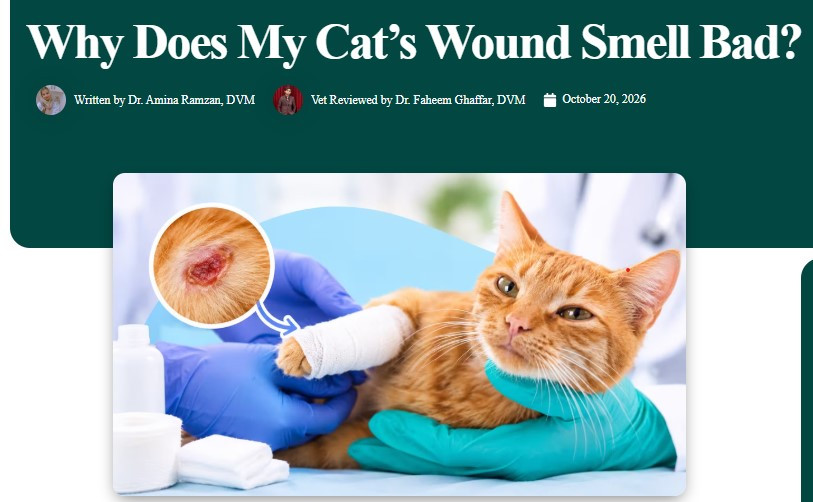

Cat’s Wound Smell Bad: Causes, Warning Signs, and Treatment
When a cat gets injured, proper wound care is essential for healthy recovery. Sometimes, pet owners notice an unpleasant odor coming from a scratch, bite, or open wound. This smell may indicate an infection or another problem that needs veterinary attention. Understanding the possible causes can help you take the right steps to protect your cat.
Why Does a Cat’s Wound Smell Bad?
There are several reasons why a wound may develop a strong or unpleasant odor. The severity depends on the type of injury, the presence of bacteria, and how much tissue has been affected.
1. Bacterial Infection
Bacteria can enter through broken skin and multiply inside a wound. An infected injury may produce a foul smell, redness, swelling, or unusual discharge. Some cats may also become less active or lose interest in food.
2. Abscesses From Cat Bites
Cat bites can create small punctures that close over while bacteria remain underneath the skin. An abscess may develop, causing swelling, pain, and pus. If it ruptures, the discharge can have a particularly unpleasant odor.
3. Damaged or Dead Tissue
Severe injuries can damage tissue and interfere with normal healing. Dead tissue may produce an unpleasant smell and increase the risk of complications. Veterinary examination is necessary to determine the appropriate treatment.
4. Poor Wound Healing
Repeated licking, scratching, contamination, or an underlying medical problem can prevent a wound from healing properly. A wound that remains open, becomes increasingly painful, or develops a bad odor should be assessed by a veterinarian.
Signs to Watch for in Your Cat
An unusual smell is not the only warning sign to consider. Look for redness, warmth, swelling, pus, bleeding, or changes in the wound’s appearance. Your cat may also hide more than usual, react painfully when touched, or stop eating normally.
If the wound smells foul or has thick discharge, arrange a veterinary examination promptly. Deep wounds, severe pain, heavy bleeding, marked weakness, or rapidly spreading swelling require urgent veterinary care.
How to Care for a Smelly Cat Wound
The safest treatment depends on the cause and severity of the injury. Keep your cat indoors and prevent licking or chewing the affected area. For a superficial wound, you may gently rinse the surface with sterile saline or clean lukewarm water if your cat tolerates it.
Do not squeeze a swollen area, drain an abscess yourself, or attempt to remove damaged tissue. Avoid applying rubbing alcohol, hydrogen peroxide, essential oils, or human medications unless specifically directed by your veterinarian.
A veterinarian may need to clean the wound, drain an abscess, assess damaged tissue, or prescribe medication when appropriate. Follow all aftercare instructions carefully and monitor the area during recovery.
For more information about possible causes and warning signs, read https://virtualvetdesk.com/why....-does-my-cats-wound- , which explains why an unpleasant wound odor may develop and when veterinary care is important.
Preventing Wound Complications
Check your cat regularly for scratches, bite marks, swelling, and tender areas. Seek advice after suspected animal bites, even if the visible injury appears small. Keep wounds protected according to veterinary instructions and prevent excessive licking during healing.
Avoid using unverified home remedies, as they may irritate the skin or delay proper treatment. Early veterinary assessment can help identify infection and reduce the risk of more serious complications.
Conclusion
A foul-smelling wound in a cat can indicate infection, an abscess, or damaged tissue. Paying attention to changes in odor, swelling, discharge, and behavior can help you recognize when something is wrong. Keep the wound clean using safe methods, avoid self-prescribed treatments, and consult a veterinarian promptly to support your cat’s recovery.
Disclaimer: This article is for educational purposes only and does not replace professional veterinary advice.