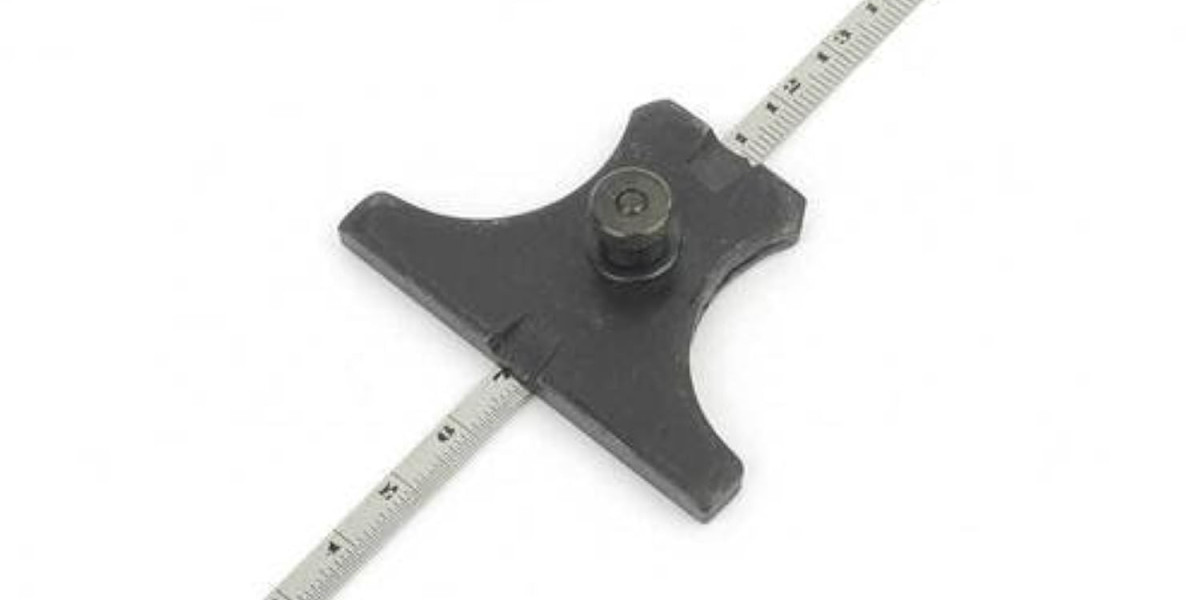

When we talk about tools that help in accurate measurement, one name that cannot be ignored is the Depth Gauge. A depth gauge is a tool designed to measure how deep a hole, slot, or cavity is. It may look small and simple, but it plays a very big role in fields like manufacturing, construction, automotive, and even woodworking. Without a depth gauge, it is almost impossible to achieve perfect accuracy in many jobs.
For example, imagine you are drilling a hole in a piece of wood. If the hole is too shallow, the screw may not fit. If the hole is too deep, it may weaken the wood. By using a depth gauge, you can avoid both problems. This shows how important this tool is, even for everyday work.
In industries like automobiles and aerospace, where even a small mistake of a few millimeters can cause problems, the depth gauge becomes even more important. It ensures that every hole, groove, or slot is exactly as deep as required.
In this article, we will discuss depth gauges in detail. We will learn what they are, their types, how they work, their uses, their advantages, and how to take care of them. By the end, you will have complete knowledge about this powerful little tool.
What Exactly Is a Depth Gauge?
A Depth Gauge is a measuring tool that tells us the exact depth of any hole, slot, groove, or recess. Unlike a normal scale or tape, which can only measure length and width, a depth gauge is made specially for depth measurement.
The design of a depth gauge is very simple. It has a flat base that rests on the surface of the material. From this base, a measuring rod or probe goes into the hole. The reading on the scale, dial, or digital screen tells you the exact depth.
Depth gauges are important because they bring precision. A ruler may give you an approximate idea, but when accuracy is needed, only a depth gauge can be trusted. In industries like automobile or machine manufacturing, even a tiny error in depth can make a part useless.
Depth gauges are available in many different models. Some are manual, like the vernier depth gauge, while others are modern and digital. The basic principle, however, remains the same: providing accurate depth measurements.
In short, a Depth Gauge is not just a measuring tool but a guarantee of accuracy, safety, and reliability in technical work.
Different Types of Depth Gauges
There are many types of depth gauges, each designed for specific purposes. Knowing them helps in choosing the right tool for the job.
Vernier Depth Gauge – This is a manual tool with a vernier scale. It requires practice to read but gives very accurate results.
Dial Depth Gauge – This tool has a circular dial with a needle. When the probe moves, the needle shows the depth. It is faster to read than a vernier gauge.
Digital Depth Gauge – This modern version shows the depth on an LCD screen. It is very user-friendly and often allows switching between millimeters and inches.
Micrometer Depth Gauge – This type is used for very fine measurements. It works with a micrometer screw and is mostly used in laboratories and industries needing very high precision.
Tire Depth Gauge – Specially designed for checking the depth of tire treads. It helps ensure road safety by checking if tires still have enough grip.
Each of these types serves a different need. For example, a carpenter may use a vernier or digital depth gauge for woodworking, while an engineer in aerospace may prefer a micrometer depth gauge for extreme accuracy.
This wide variety makes depth gauges versatile tools for almost every industry.
How Does a Depth Gauge Work?
The working of a Depth Gauge is based on a simple principle. The flat base of the tool sits firmly on the surface of the material, and the probe or measuring rod is lowered into the hole or groove. The depth of the hole is the distance the rod travels. This reading is shown on a scale, dial, or digital display.
In a vernier depth gauge, the user matches the lines on the main scale and the vernier scale to find the measurement. This requires focus but is highly accurate.
In a dial depth gauge, the movement of the rod rotates a needle on a dial, making it easier to read.
In a digital depth gauge, sensors convert the rod’s movement into an electronic signal, which is instantly shown on a digital screen. This makes it very convenient for beginners.
The key factor in using any depth gauge is placement. The base must sit flat and steady on the surface. If the base is tilted or the surface is uneven, the reading may be wrong. This is why professionals clean the surface and tool before taking measurements.
Though the concept is simple, the depth gauge provides results that are highly precise, which is why it is trusted worldwide.
Common Applications of Depth Gauges
The Depth Gauge is used in many fields. Its wide applications prove its importance in both professional and daily life.
Automotive Industry – Mechanics use tire depth gauges to measure tire tread depth. This ensures safe driving. They also use depth gauges for checking brake wear and engine parts.
Manufacturing – In factories, depth gauges check the depth of holes, slots, and grooves in machine parts. Even a slight error can make a product faulty, so this tool ensures quality control.
Construction – Builders use depth gauges to measure foundations, fittings, and grooves in concrete. Correct depth is critical for structural safety.
Carpentry and Woodworking – Carpenters use depth gauges to measure joints and recesses to make sure everything fits well.
Scientific Research – Laboratories often use micrometer depth gauges for precise experiments and testing.
For example, without a tire depth gauge, a driver may not realize the tire treads are too worn out, which can cause accidents. This shows how even a small tool can save lives.
Thus, depth gauges play a silent but vital role across different areas of work.
Advantages of Using a Depth Gauge
There are many advantages of using a Depth Gauge, which is why it is a common tool in various industries.
Accuracy – It gives very precise measurements, often up to 0.01 mm.
Versatility – Can measure depth in holes, grooves, slots, and more.
Safety – Helps in preventing accidents, especially in checking tire treads.
Consistency – Ensures the same results every time, which is very important in mass production.
Durability – Made of strong materials like stainless steel, so they last long.
Ease of Use – Especially digital depth gauges, which are simple to read.
Imagine a machine where a part has to fit perfectly. If the slot is even slightly deeper or shallower, the whole machine may fail. By using a depth gauge, such costly errors can be avoided.
In short, depth gauges offer accuracy, safety, and reliability, making them essential in both big industries and small workshops.
Care and Maintenance of Depth Gauges
To keep a Depth Gauge accurate and long-lasting, proper care is necessary. Here are some tips:
Clean after Use – Wipe the tool to remove dirt, oil, and dust.
Store Properly – Keep it in a protective case to prevent damage.
Regular Calibration – This ensures continued accuracy.
Avoid Excess Force – Do not press the rod too hard.
Lubrication – Apply a little oil on moving parts of manual gauges.
Safe Handling – Never drop the tool or expose it to extreme temperatures.
Proper care not only extends the life of the depth gauge but also ensures reliable results. Neglecting maintenance can lead to errors, which may cause costly mistakes in professional work.
Taking care of your depth gauge is a small step that ensures big benefits in the long run.
Conclusion
The Depth Gauge may look like a small tool, but its importance is very big. From industries like automobile and construction to everyday woodworking, it ensures accuracy, safety, and quality. It comes in different types like vernier, dial, digital, micrometer, and tire depth gauges, each suited for specific tasks.
By learning how it works, where it is used, its advantages, and how to maintain it, anyone can understand why it is trusted worldwide. In simple words, the depth gauge is not just a measuring tool—it is a symbol of precision and reliability.
Frequently Asked Questions (FAQs)
Q1. What is a depth gauge used for?
A depth gauge is used to measure the depth of holes, slots, grooves, and cavities with high accuracy.
Q2. What are the types of depth gauges?
The main types are vernier, dial, digital, micrometer, and tire depth gauges.