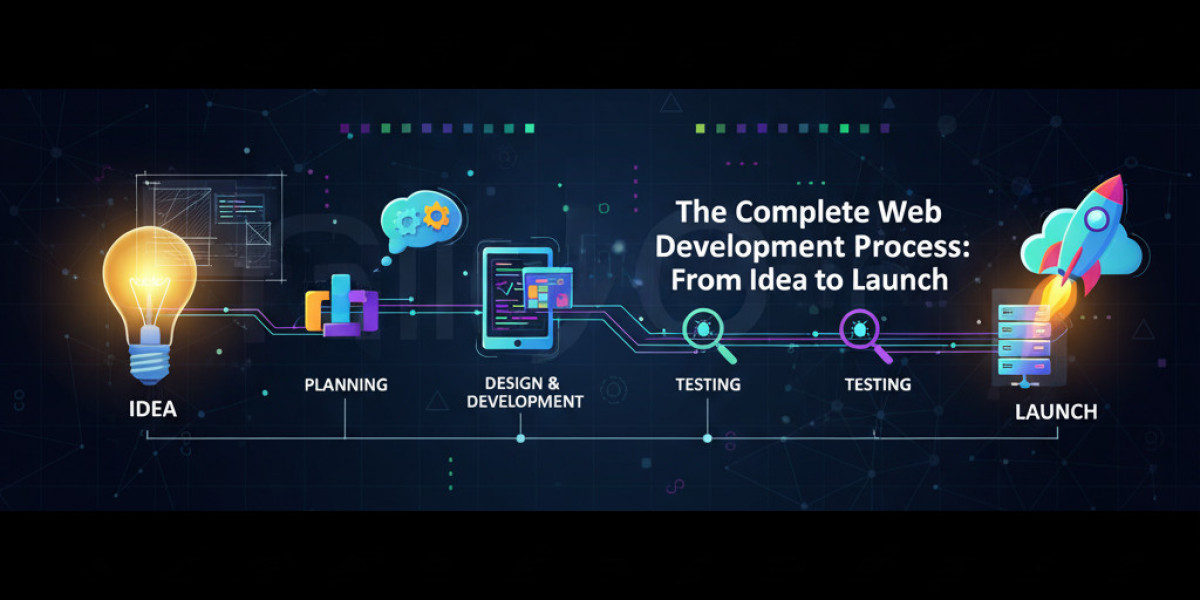

Building a website today isn’t just about putting together a few pages—it’s about creating a powerful digital presence that supports your brand, engages users, and drives measurable results. Whether you’re a startup creating your first site or an established business upgrading your digital infrastructure, understanding the web development process helps you make better decisions and avoid costly mistakes.
Here’s a step-by-step breakdown of how professional web development transforms an idea into a fully functional, scalable website.
Step 1: Planning & Requirement Analysis
Before any coding starts, the foundation is laid:
Define Goals: Is the site meant to generate leads, sell products, or provide information?
Identify Audience: Who will use the site? What devices do they prefer? What problems are they trying to solve?
Scope & Features: List must-have features (e.g., e-commerce checkout, blog, booking system) and nice-to-have features for later phases.
Technical Requirements: Choosing frameworks, CMS platforms, hosting options, and integration needs (like CRM or ERP systems).
Example: A healthcare startup might prioritize HIPAA compliance and secure patient portals, while an e-commerce business focuses on product catalogs and payment gateways.
Step 2: UI/UX Design
Design isn’t just about looks—it’s about usability.
Wireframes & Mockups: Low-fidelity outlines to visualize layouts and navigation.
User Experience (UX): Ensures intuitive navigation, fast interactions, and easy access to key information.
Visual Design (UI): Colors, typography, imagery, and brand consistency.
Responsive Layouts: Optimized for desktops, tablets, and mobile devices.
Good design reduces bounce rates, improves conversions, and strengthens brand trust.
Step 3: Front-End Development
This is where designs come to life.
Languages & Frameworks: HTML, CSS, JavaScript, plus frameworks like React, Angular, or Vue.js.
Responsive Coding: Ensuring layouts adapt to all screen sizes.
Animations & Interactivity: Smooth transitions, hover effects, and dynamic forms.
Accessibility Standards: Compliance with WCAG guidelines so the site is usable by people with disabilities.
Step 4: Back-End Development
Behind the scenes, the engine runs:
Server-Side Logic: Handling logins, transactions, and dynamic content.
Databases: Structured storage with MySQL, PostgreSQL, or MongoDB.
APIs & Integrations: Payment gateways, shipping providers, CRMs, and third-party tools.
Security Layers: Firewalls, encryption, and secure authentication to protect data.
Step 5: Testing & Quality Assurance
No website should go live without rigorous testing.
Functional Testing: Ensuring every feature works as intended.
Performance Testing: Checking page load speeds, server response times, and stress tests for high traffic.
Cross-Browser Compatibility: Chrome, Safari, Edge, and Firefox should all render correctly.
Mobile Testing: Verifying seamless functionality across different devices and operating systems.
Security Testing: Identifying vulnerabilities before attackers do.
Step 6: Deployment & Launch
Once testing is successful:
Hosting Setup: Choosing the right environment (shared, VPS, or cloud).
Domain & SSL Configuration: Securing the site with HTTPS.
Version Control & CI/CD: Using tools like GitHub and automated deployment pipelines for smoother rollouts.
Monitoring Tools: Implementing analytics and error tracking from day one.
Step 7: Post-Launch Maintenance
A website is never “done.” Continuous updates keep it functional and competitive.
Bug Fixes & Updates: Regular improvements to prevent downtime.
Security Patches: Staying ahead of vulnerabilities.
Content Updates: Fresh blogs, products, or landing pages for campaigns.
Scaling: Adding new features as business needs grow.
Why Work With Experts?
While DIY platforms exist, the full process requires expertise across multiple areas—design, coding, security, UX, and scaling. Professional web development companies provide:
Dedicated teams for each stage (design, front-end, back-end, QA).
Experience with complex integrations and frameworks.
Proven workflows for faster, more reliable delivery.
Long-term support for updates and growth.
Final Thoughts
A website is more than an online presence—it’s a growth engine. By understanding the complete web development process, businesses can plan smarter, avoid common pitfalls, and invest in solutions that scale.
Whether you’re launching your first site or upgrading an existing platform, approaching web development strategically ensures your digital foundation is strong, secure, and ready for the future.