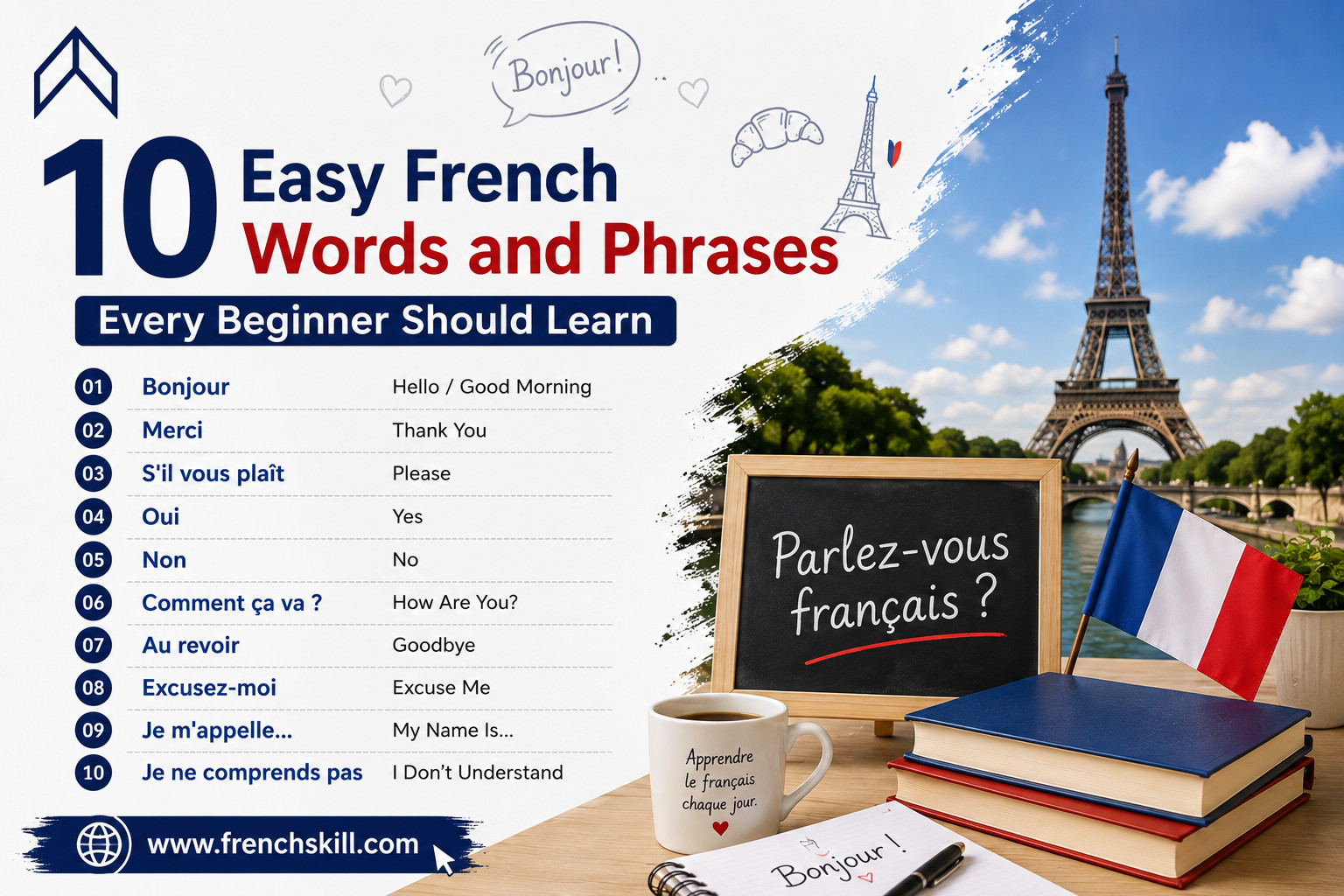
10 Easy French Words and Phrases Every Beginner Should Learn
Learning a new language can be exciting, especially when you start using simple words and phrases in everyday conversations. French is one of the most widely spoken languages in the world, and learning a few basic expressions can help beginners feel more confident from the very beginning.
Whether you are learning French for travel, education, work, or personal interest, mastering common phrases is a great first step. If you are planning to join French Classes in Jaipur, these essential words and expressions can also help you build a strong foundation before or alongside your classes.
1. Bonjour — Hello / Good Morning
Bonjour is one of the most important French words for beginners.
It means “Hello” or “Good morning” and is commonly used when greeting someone during the day.
Example:
Bonjour ! Comment allez-vous ?
Hello! How are you?
Using bonjour when entering a shop, meeting someone, or starting a conversation is a simple way to sound polite and natural in French.
2. Merci — Thank You
Merci means “Thank you.”
It is a simple but essential word that you will hear and use frequently.
Example:
Merci beaucoup !
Thank you very much!
You can also say merci beaucoup when you want to express extra appreciation.
3. S’il vous plaît — Please
S’il vous plaît means “Please.”
It is generally used in polite or formal situations. When speaking casually with a friend or someone you know well, you may hear s’il te plaît instead.
Example:
Un café, s’il vous plaît.
A coffee, please.
Learning polite expressions early can make everyday conversations much easier.
4. Oui — Yes
Oui means “Yes.”
It is one of the easiest French words to remember and is useful in almost every conversation.
Example:
Oui, je comprends.
Yes, I understand.
Its pronunciation is approximately like “wee.”
5. Non — No
The opposite of oui is non, which means “No.”
Example:
Non, merci.
No, thank you.
These two short words are among the first expressions most French learners should memorize.
6. Comment ça va ? — How Are You?
Comment ça va ? is a common informal way to ask someone “How are you?” or “How’s it going?”
A simple response is:
Ça va bien.
I am doing well.
You can also say ça va to mean “I’m fine” or “It’s going okay,” depending on the context.
Learning this phrase helps beginners move beyond memorizing individual words and start having short conversations.
7. Au revoir — Goodbye
When you want to say goodbye, use au revoir.
Example:
Au revoir, à demain !
Goodbye, see you tomorrow!
Write on Medium
The phrase is useful in both everyday and formal situations. You will hear it frequently when leaving shops, restaurants, workplaces, classrooms, and other places.
8. Excusez-moi — Excuse Me
Excusez-moi means “Excuse me.”
You can use it when trying to get someone’s attention, asking a question, or politely interrupting someone.
Example:
Excusez-moi, où est la gare ?
Excuse me, where is the train station?
For informal situations, you may hear excuse-moi instead.
9. Je m’appelle… — My Name Is…
One of the first things you will probably want to learn in French is how to introduce yourself.
Je m’appelle [name] means “My name is [name].”
Example:
Je m’appelle Rahul.
My name is Rahul.
You can follow it with:
Enchanté(e) !
Nice to meet you!
This phrase is particularly useful when meeting new people or introducing yourself in a French class.
10. Je ne comprends pas — I Don’t Understand
As a beginner, you will not understand everything immediately — and that is completely normal.
Je ne comprends pas means “I don’t understand.”
Example:
Je ne comprends pas. Pouvez-vous répéter, s’il vous plaît ?
I don’t understand. Can you repeat, please?
This phrase can be extremely useful when communicating with French speakers and during your language-learning journey.
Why Should Beginners Learn Common French Phrases?
Learning individual vocabulary words is useful, but phrases allow you to start communicating more quickly. Common expressions also help you become familiar with French pronunciation, sentence structure, and conversational patterns.
Once you are comfortable with basic greetings and expressions, you can gradually move toward grammar, vocabulary, listening, speaking, reading, and writing.
If your goal is to study, work, or live in a French-speaking environment, structured learning can help you progress more efficiently. Students preparing for language requirements can also explore options such as a tcf course online to develop the skills needed for the relevant French proficiency test.
Similarly, learners planning to take the TEF may benefit from dedicated tef exam preparation, particularly when they need to improve their listening, reading, writing, and speaking skills within a specific timeframe.
Tips for Memorizing French Words and Phrases
Here are a few simple ways to remember what you learn:
Practice Every Day
Spend 10–15 minutes reviewing French vocabulary and phrases every day. Consistent practice is usually more effective than studying for several hours only once a week.
Speak Out Loud
Don’t just read French words silently. Say them aloud and pay attention to pronunciation.
Use New Words in Sentences
Instead of memorizing bonjour by itself, practice using it in a sentence or imaginary conversation.
Listen to Native French
French songs, podcasts, videos, and conversations can help you become familiar with natural pronunciation and rhythm.
Keep a Vocabulary Notebook
Write down new words, their meanings, and example sentences. Review your notes regularly to strengthen your memory.
Start Your French Learning Journey Today
You don’t need to know hundreds of French words to begin communicating. Learning these ten simple expressions can give you the confidence to greet people, ask for help, introduce yourself, and participate in basic conversations.
The key is to practice regularly and gradually build your vocabulary and grammar. With consistent effort and the right guidance, you can progress from simple phrases to confident French communication.
FrenchSkill can be a helpful starting point for learners who want to build their French skills systematically and continue progressing from beginner-level expressions to more advanced communication.